
About Us People Graduate Program Undergraduate Program Research Facilities Related Sites Events Home


Materials and Energy Applications

MSE faculty conducts a wide range of experimental and theoretical research. Four areas of concentration are:

This research is carried out both in small groups  and as part of large interdisciplinary research centers.  Two of these centers are situated in the MSE department:  Department faculty and students are also active participants in thefollowing centers:

Soft Materials and Biomaterials

Soft materials are diverse, ranging from suspensions of nano- to micron-size particles, to solutions of semiflexible and flexible polymers, to mixtures of macromolecules of varying shapes and rigidity. Soft materials are also basis for many natural systems and are ubiquitous in commercial applications. Current research in this area range from synthesis of novel nano-structured organic-inorganic materials for drug, gene, or protein delivery to determination and manipulation of the interactions among particles in suspension to control and understand their structure, dynamics and self-assembly, understanding the phase behavior of water-soluble polymers (synthetic and biological) under in-vivo conditions, and investigation to improve the stability and efficiency of energy storage devices, such as fuel cells and batteries, via synthesis of new materials for use as catalyst, electrodes, and membranes.

MSE faculty involved in Soft Materials and Biomaterials research are:

Electronic, Magnetic and Optical Materials

Research in this area is aimed at developing a fundamental understanding of materials and processes used in a broad range of electronic, magnetic, and optical devices. Topics of interest include the relationships between process conditions and device performance, basic optical and quantum phenomena in materials, and thin film epitaxial processing. Materials of interest are wide band gap semiconductors, dielectrics, multifunctional (and/or multiferroic) materials, carbon-based semiconductors and nanostructures, metallic contacts, conductors and electrodes; bulk and thin film hard magnetic materials, and bulk and thin film soft magnetic metallic nanocomposites. These materials are applied in devices that include microelectronic devices for high-frequency, high-power and high-temperature applications, RF circuits, optoelectronic devices including light-emitting diodes and semiconductor lasers that emit in the green blue and ultra-violet regions of the spectrum, gas and biological sensors, and information storage.

MSE faculty involved in Electronic Magnetic and Optical Materials research are:

Microstructural Science

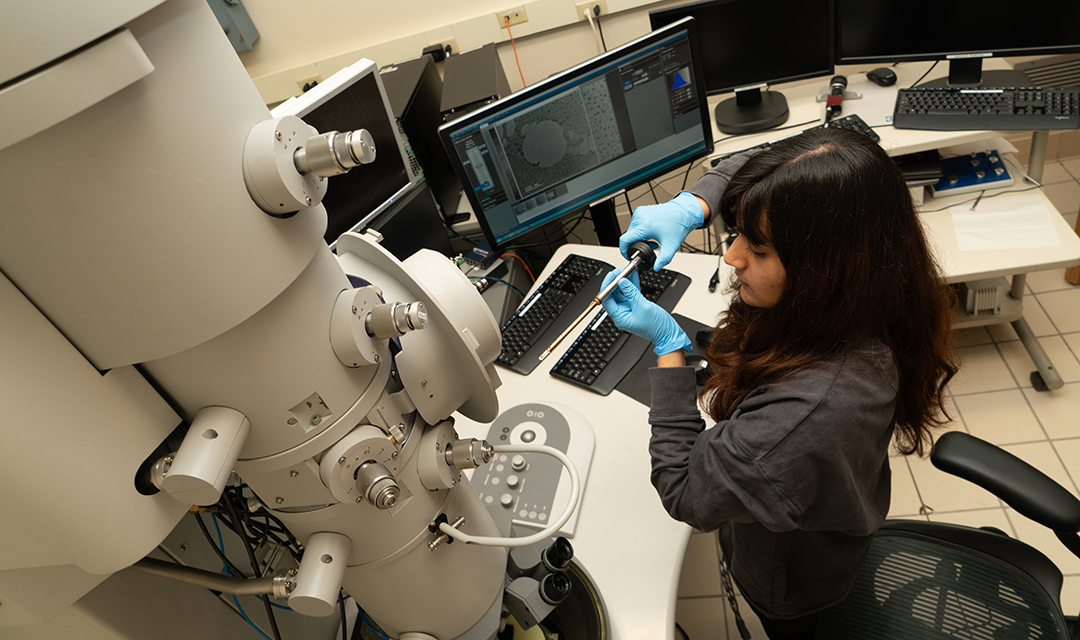
The goals of microstructural science research at CMU are to understand the origins of the quantifiable characteristics of polycrystals that arise during processing, to develop strategies for influencing these characteristics in predictable ways, and to define microstructural metrics that can be directly related to macroscopic properties and performance. Phenomena of interest include grain growth, recrystallization, phase transformations, and the physical properties of polycrystals. Research involves the study of materials used in structural, electrical, and magnetic applications. The program applies both experimental (electron microscopy, atomic force microscopy, nanoindentation, and scanning Auger microscopy) and computational methods (Monte Carlo, finite element, finite difference, molecular dynamics, and ab-initio calculations). Much of this research is conducted in the CMU MRSEC.

MSE Faculty involved in Microstructural Science Research are:

Iron and Steelmaking Research

Research in this area is conducted within the Center for Iron and Steel Making Research (CISR), whose mission is to perform fundamental research in ironmaking, steelmaking, refining and casting. The CISR conducts cooperative research that leverages industrial and government support. Areas of interest include experimental and computational research on high temperature kinetics of metallurgical processes, primary metal production with the goal of reducing energy and emissions, fundamentals of gas-metal and slag-metal reactions, refining of metals for high quality products, and examining competitive, economic, and environmental issues related to metal production.

MSE Faculty involved in Iron and Steelmaking Research are:

top

Soft Materials and Biomaterials

Electronic, Magnetic and Optical Materials

Microstructural Science

Iron and Steelmaking Research

CISR
 
MRSEC

© 2004 Carnegie Mellon University
Site Design: Academic Web Pages